How fast can you get restrooms out after a disaster?
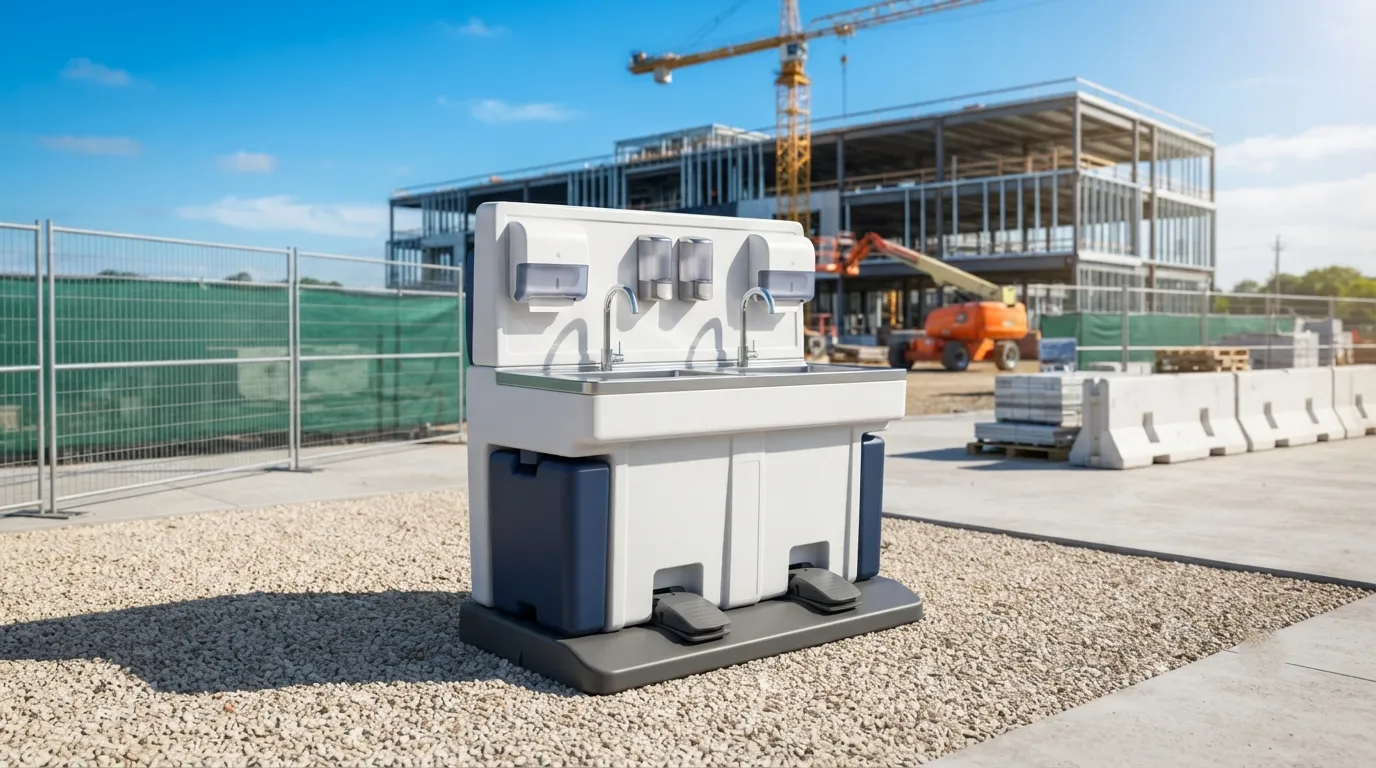
Speed depends on road access and how many units you need. For a single-family situation, emergency porta potty rental usually means same-day delivery once we confirm a clear path for the truck. A roll-off dumpster rental delivery needs about 60 feet of straight clearance behind the truck, and that same clearance rule applies to restroom trailers and standard units going into a debris-strewn driveway or lot. If a tree is down or a road is washed out, tell us before we load the truck. Plymouth crews dealing with flood damage or wind damage often need more than one type of unit at once: a standard porta potty rental for general use, a handwashing station rental for crews and volunteers, and sometimes a holding tank rental if the sewer lateral itself is compromised. OSHA 1926.51(a)(1) requires an adequate supply of potable water at any place of employment, and that standard does not pause because the power is out. We treat disaster response calls as priority dispatch, ahead of routine standard porta potty rental swaps, because the sanitation gap during a disaster is the part people forget until it is already a problem.
What do relief crews and shelters actually need?
It depends on headcount and how long the response runs. A church basement running as a temporary shelter has different needs than a National Guard staging area or a utility crew working 12-hour shifts to restore power across Plymouth. OSHA 1926.51(c) sets the baseline for jobsite-style crews: one toilet facility for 20 workers or fewer, then one toilet seat and one urinal per 40 workers as headcount climbs past that, and one per 50 once you are above 200. For a shelter serving displaced residents rather than a labor crew, a portable restroom rental order should include at least one accessible unit; ADA Standards section 213.2 requires that at least 5 percent of clustered single-user units be accessible, never fewer than one. Handwashing matters as much as toilets here. 29 CFR 1910.141(d)(2) requires soap and towels or a hand-drying device at wash stations, not just sanitizer, which is a detail a lot of temporary setups miss. For longer deployments, an 8 stall restroom trailer or 4 stall restroom trailer covers a shelter population better than scattered single units, and a shower trailer rental becomes worth the cost once a response runs past a few days.
How long do disaster response rentals usually run?
Most disaster jobs are not one-day events. Flood cleanup and rebuild work in Plymouth commonly stretches into weeks, so pricing shifts from a day rate to a week or month rate fast. Below are the standard unit price bands we work from, along with restroom trailer options for larger deployments.
| Duration | Standard Unit | Restroom Trailer |
|---|---|---|
| Day | $100 - $350 | $175 - $2,500 |
| Week | $130 - $500 | $150 - $1,650 |
| Month | $125 - $325 | not typically monthly |
A porta potty monthly rental makes sense for extended rebuild timelines, while a shorter cleanup might fit better under porta potty rental per day pricing. For full cost breakdowns across scenarios, see porta potty rental cost and restroom trailer rental cost. If your situation also involves damaged storage or displaced equipment, a storage container rental or mobile office trailer rental can run alongside the sanitation order. Debris removal is its own project: a 30 yard dumpster rental handles most storm debris loads, and what cannot go in a dumpster matters more than usual after a disaster, since hazardous household chemicals and treated lumber often turn up mixed into flood debris.
How many portable toilets does a shelter need?
It scales with headcount, similar to a jobsite. Use OSHA 1926.51(c) as the floor: one unit per 20 people, adjusting up as numbers grow. For exact counts by expected population, our how many porta potties do I need guide walks through the math.
Can you deliver during active flooding or road closures?
We will try, but truck access is the limit, not willingness. A driver still needs roughly 60 feet of clear straight approach to place a unit safely. Call contact with your address and current road conditions before we dispatch.
Do disaster relief units need to be ADA accessible?
Yes, if units are clustered for shelter or public use. ADA Standards section 213.2 requires at least 5 percent accessible, never fewer than one. See ADA accessible porta potty for unit specs and ADA restroom requirements for the full standard.
What if we need handwashing but not full restrooms?
That is common when toilets are still working but water service is out. A portable sink rental or hand sanitizer station rental covers that gap. 29 CFR 1910.141(d)(2) still requires soap and towels, not sanitizer alone, for compliant handwashing.
How does this compare to service in nearby cities?
We run the same disaster response dispatch across the metro. Minnetonka sits 7.2 miles south of Plymouth, and St. Louis Park is 9.1 miles southeast, both inside our normal response radius. Check service areas or request a quote directly.
Next step
Get a delivery date
Tell us the address, the dates and the headcount. We size the order and confirm the route.